
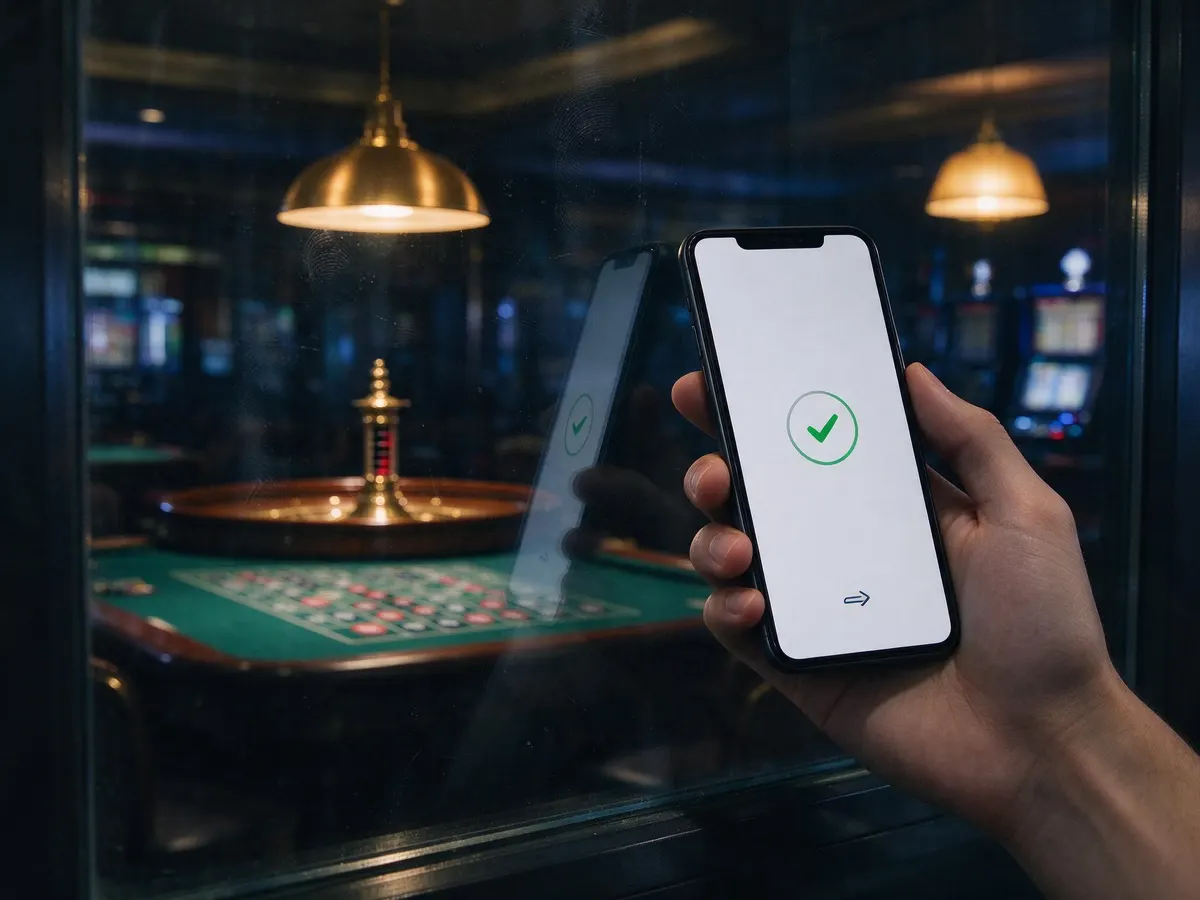
Where do you think most players actually lose money to crime at a casino: inside the game, or around it?
It’s around it, almost every time. Gaming related fraud rarely involves a rigged roulette wheel or a hacked slot. It involves a payment that goes somewhere it shouldn’t, an identity that gets borrowed, a “withdrawal agent” on Telegram, or a platform that looks like a casino and is really just a payment funnel. That’s the argument of this piece, and Macau’s own crime figures back it up.
What Macau’s 12% rise in gaming crime actually tells you
Police data out of Macau for the first nine months of the year showed gaming-related crime up roughly 12% year on year, with two categories leading the count: fraud and unlicensed money exchange. Not cheating devices. Not card marking. Fraud and illegal money changing.
That matters because Macau is about as tightly supervised as casino gambling gets, with a small number of licensed concessionaires, heavy surveillance, mandatory identification at the cage, and a dedicated regulator. If criminals in that environment are concentrating on deception and informal cash movement rather than attacking the games themselves, it tells you where the soft tissue is: people and payments.
Two more things worth reading into the numbers. First, a rise in reported crime isn’t the same as a rise in crime. Better reporting channels, more active policing and more aggressive enforcement against money changers all push recorded cases up. Second, the mix is the useful signal, not the headline percentage. The mix says: whatever market you play in, your exposure is financial and social, not mechanical.
For an Indian player, that translates directly. You probably aren’t walking a Cotai casino floor. But you are moving money through UPI, sharing documents for verification, clicking offers in WhatsApp groups and using apps you found through an ad. Same attack surface, different setting.
The gaming related fraud schemes you’re most likely to meet
Here’s the short version before the detail: the four schemes that account for most player losses are identity theft, card and payment fraud, fake gambling platforms, and investment pitches dressed up as gambling. They overlap, and they usually start with information you handed over voluntarily.
Identity and credit card fraud
Casino accounts are attractive to identity thieves because they sit at the junction of verified ID documents and live payment rails. The common patterns:
- Document harvesting. A fake site or “bonus claim” page asks for your PAN, Aadhaar, a selfie and a bank statement before you’ve deposited a rupee. Legitimate operators do ask for KYC documents, but they ask through a secured account area, typically at withdrawal or when thresholds are hit, not via email attachments or a chat app.
- Account takeover. Reused passwords plus a leaked email get someone into your account, where they change payment details and withdraw. Two-factor authentication kills most of these attempts.
- Card-not-present fraud. Stolen card details get tested on gambling sites because deposits are instant and the amounts are unremarkable. If you’re the cardholder, you find out when a chargeback appears on your statement; if your card was used on an account in your name, you may also end up explaining it to a compliance team.
- Money mule recruitment. Someone offers you a cut to receive and forward “gaming winnings” through your bank account. That’s laundering. The commission is small and the legal exposure is not.
Fake online casinos and cloned apps
This is the most industrialised scam in the space. A site copies the branding, game thumbnails and even the terms of a real operator, buys social ads, pays affiliates and accepts deposits. Games may be pure animations with no provider behind them, or real-looking but unlicensed clones where outcomes aren’t produced by an audited RNG at all.
The tell is almost never the design, which is often excellent. It’s the exit. Deposits work beautifully. Withdrawals trigger a new condition: a “tax” payment, a “verification fee”, an insistence that you wager the balance again, or a support agent who stops replying. Any platform that asks you to pay money in order to take money out is running a scam. No licensed operator does this, ever.
Cloned APK files deserve a special mention. An app downloaded from a link in a message group, rather than an official store or the operator’s own domain, can carry anything from a credential stealer to an SMS reader that intercepts OTPs.
Investment pitches and Ponzi schemes wearing a casino costume
These don’t sell you a game, they sell you a return. The pitch is a “betting syndicate”, an “AI aviator bot”, a “guaranteed 10% daily” arbitrage fund, or a tipster who wants a share of a bankroll he manages for you. Early participants get paid from later deposits until the inflow stops.
The honest math is the defence here. Every casino game carries a house edge, the inverse of its RTP. A slot at 96% RTP keeps about 4% of everything wagered over the long run, and sports markets carry a bookmaker’s margin built into the prices. Nobody can convert a negative expected value product into a reliable daily income stream. If someone promises fixed returns from gambling, the only guaranteed outcome is that you’re funding someone else’s withdrawal.
| Scheme | How it reaches you | Main defence |
|---|---|---|
| Identity document theft | Fake KYC requests, bonus claim forms, chat apps | Only upload documents inside a verified account area |
| Account takeover | Reused passwords, phishing links, OTP interception | Unique password plus two-factor authentication |
| Fake casino or cloned app | Social ads, affiliate links, APK files in groups | Check the licence, test a small withdrawal early |
| Fee-for-withdrawal extortion | Support agent demands a “tax” or “unlock fee” | Never pay to withdraw; treat as confirmed fraud |
| Investment or Ponzi pitch | Telegram syndicates, bots, managed bankrolls | No gambling product yields fixed returns |
| Unlicensed money exchange | Informal “agents” offering better rates or faster payouts | Use the operator’s own cashier and regulated channels |
Unlicensed money exchange: the quiet half of the problem
Illegal money changers exist because regulated payment channels are deliberately slow and nosy. Banks ask questions. Casino cages record identities and report large or unusual transactions. An informal exchanger asks nothing, which is exactly the service being sold.
Around physical casinos, these operators cluster near entrances and hotel lobbies, converting currency, advancing cash against cards through sham merchant terminals, and settling balances across borders so the money never visibly crosses one. Macau’s enforcement data puts this category near the top for a reason: it’s the plumbing that makes other gaming crime work, and it frequently comes bundled with loan sharking, detention of debtors and laundering of criminal proceeds.
The online equivalent is the payout “agent”. You’ll see them offering to top up your casino wallet at a better rate, or to push your withdrawal through faster for a small cut. What you’re actually doing is handing your money to a stranger with no obligation to you and no regulator above them. Three risks follow:
- No recourse. If the agent keeps your deposit, there is no complaints process, no licensing body, no chargeback.
- Tainted funds. The rupees landing in your account may be someone else’s crime proceeds. Your bank can freeze the account, and you get to explain the transfers.
- Account closure. Operators run transaction monitoring. Third-party deposits usually breach the terms outright, which can void a balance you earned legitimately.
In India, where payments for offshore gambling sites are already a grey zone, this is where otherwise careful players get burned. Keep money in your own name, in your own accounts, through the operator’s published cashier. Also remember that winnings from online gaming are taxable in India and tax is deducted at source on net winnings by the platform, so a payout route that bypasses the official cashier is also a payout route that leaves you with an unexplained bank credit.
What regulators actually do about this
Regulation won’t change a game’s house edge, but it is the main reason your money and identity are safer on a licensed platform than an anonymous one. Three mechanisms do most of the work.
Anti-money laundering obligations
Licensed casinos aren’t classified as financial institutions. Under the Financial Action Task Force framework they sit in a separate category, Designated Non-Financial Businesses and Professions, usually shortened to DNFBPs. The AML duties still apply: customer due diligence before and during the relationship, enhanced due diligence for high-risk customers, record keeping, thresholds that trigger reporting, and mandatory suspicious activity reports to a financial intelligence unit. The international standard-setter here is the FATF, whose recommendations most national AML regimes, including India’s, are built around. Casinos are explicitly within scope.
Practically, this is why a real operator asks where a large deposit came from and why a stranger offering to fund your account is a compliance problem rather than a convenience.
Licensing and compliance requirements
A licence is a set of enforceable promises: segregated player funds, audited random number generators, published terms, dispute resolution, advertising limits, age verification and responsible gambling tools. Regulators can fine, suspend or revoke. That enforcement threat, not the logo in the footer, is what gives a licence value.
Licence quality varies, and it’s worth knowing the difference between a strict regime with real audit and dispute machinery and a nominal registration. Either way, verify the licence on the regulator’s own public register rather than trusting a badge image on the site.
Cross-border cooperation
Fraud rings operate across jurisdictions by design: servers in one country, payment agents in a second, victims in a third. The counterweight is information sharing between police forces and gaming commissions, mutual legal assistance, coordinated action against illegal payment processors, and intelligence exchange on junket networks and laundering typologies. Macau’s police publish crime statistics partly because transparency supports that cooperation.
How legitimate casinos stop fraud before it reaches you
Compliance teams at licensed operators spend most of their time on exactly the schemes above. The standard toolkit:
- Identity verification. Document checks, liveness or selfie matching, address confirmation and screening against sanctions and politically exposed persons lists. This is also what prevents a minor or a self-excluded player from opening an account.
- Device and behaviour analytics. Flagging multiple accounts from one device, impossible travel between logins, or a deposit pattern that looks like card testing.
- Payment name matching. Withdrawals return to the same verified method and account holder, which is the single most effective block on both mule activity and account takeover cashouts.
- Transaction monitoring. Automated rules plus human review for structuring, rapid deposit-withdrawal cycling with minimal play, and bonus abuse rings.
- Game integrity testing. Independent laboratories certify RNG output and verify advertised RTP, and crash-style games increasingly publish provably fair seeds and hashes so players can check individual rounds.
- Responsible gambling controls. Deposit and loss limits, cool-off periods, self-exclusion and reality checks, all of which also reduce the desperation that fraudsters target.
Yes, this is why verification feels tedious when you want to withdraw on a Friday night. The friction is the product working.
Red flags, and a five-minute check you can run yourself
Before you deposit anywhere new, do this:
- Find the licence number in the footer and look it up on the regulator’s public register. If the register doesn’t list the exact company name shown in the terms, stop.
- Read the withdrawal section of the terms. Look for maximum cashout caps, wagering requirements, game weighting and dormancy fees. A 30x wagering requirement on a ₹1,000 bonus means ₹30,000 wagered before withdrawal, which is a condition, not a scam, but you should know it before you accept.
- Check the payment methods are named, branded processors in the cashier, not an “agent” contact or a bare UPI ID.
- Deposit small, play a little, then withdraw a small amount before you commit more. A real operator will process it after KYC. A fake one will invent a fee.
- Search the operator name with the words complaint and withdrawal, and read the detail rather than the star rating.
Treat these as hard stops: a demand for payment to release winnings, support that only exists on a messaging app, pressure to deposit now for an expiring offer, a promise of guaranteed or fixed returns, a request for your password or OTP, and anyone offering to deposit on your behalf or receive funds for you.
If something does go wrong, act in order. Freeze the channel first by reporting the transaction to your bank or UPI provider and disputing it. Then file a complaint with the national cybercrime portal, since most of these cases are financial cybercrime rather than gambling disputes. If the operator is licensed, escalate to the regulator or the licence’s named dispute resolution body with your account ID, timestamps and transaction references. Keep screenshots of everything, including chat logs, before accounts get deleted.
The useful lesson from Macau’s figures isn’t that casinos are dangerous places. It’s that the dangerous part has moved to the edges: who holds your identity, who moves your money, and who is promising you something the math can’t deliver. Gambling itself is entertainment with a built-in cost, the house edge, and it should only ever be funded with money you can afford to lose. Guard the edges, set your deposit limits, and if your play stops feeling like a choice, use the self-exclusion tools or contact a support helpline.