
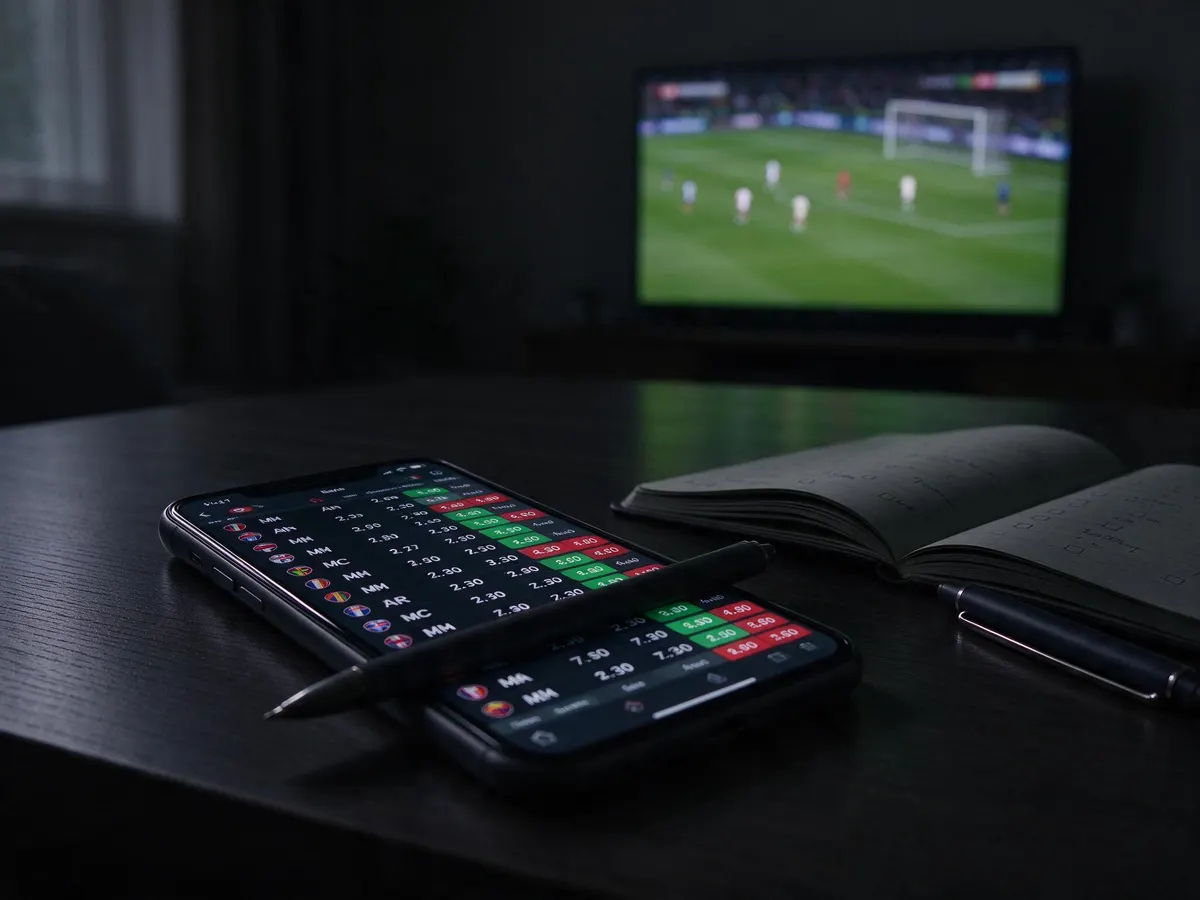
Knowing sport does not protect you. That is the belief worth killing first, because it is the one that keeps smart, informed bettors from ever asking whether their betting has turned into something else. Research on problem gambling in sports betting keeps pointing the other way: the people who feel most in control of the outcome are often the ones wagering most often, chasing hardest, and noticing last.
What the UNLV research actually found
Interim data from a University of Nevada Las Vegas study found a high rate of serious gambling problems among sports bettors in Colorado. In a random sample of 500 Coloradans that included both gamblers and non-gamblers, 4% said they bet on sports, and 7% of the gamblers in the sample reported serious problems. Lead researcher Shane Kraus, a UNLV psychology professor, called the prevalence rate “kind of high” when set against the size of the sports betting market, and said plainly that it is “not a good thing.”
Some context on scale. Colorado sports bettors wagered $6.4 billion in the 2025-2026 fiscal year, producing $47 million in state tax revenue, against a state population of about 6.01 million. Within the study, the lottery was the most common gambling activity at 41.4% of participants, followed by sports betting at 17.4%, slots and video poker at 16.2%, casino table games at 11.6% and bingo at 11.4%. Kraus also noted problem gambling running 2% higher among women, and was straight about not knowing why yet: his team is “just digging into it now.”
Two honest caveats, because they matter more than the headline number. First, these are interim results, presented at the Problem Gambling Coalition of Colorado annual conference and funded through the Colorado Limited Gaming Control Commission’s Responsible Gaming Grant Program. The broader national arm covers 1,400 gamblers and non-gamblers, and final results are not due until after the Super Bowl in February. Second, a 500-person sample slices thin once you narrow to sports bettors, so treat 7% as a signal that deserves the follow-up data rather than a settled prevalence figure. Kraus himself framed it as a benchmark, something Colorado now has to lower.
None of that makes it irrelevant in India. The structure of the product is the same here as in Colorado: a phone, in-play markets on every ball and every corner, and a steady feed of promotional messaging. The study is also measuring that last part. Among participants, 59.4% saw sportsbook advertising at least once during the week of the World Cup Final, and 35.1% saw promotional offers. Kraus said he is not convinced the ads are always misleading, though the researchers may yet find some are.
Why sports betting bites harder than a slot machine
Sports betting carries higher addiction risk than most casino games because it feels like analysis rather than gambling, it attaches money to something you already care about, and it never runs out of events. Those three forces compound. A slot machine never persuades you that you were right.
The illusion of skill and control
You do know more about cricket than the average person. That is true and it is also beside the point, because you are not betting against the average person. You are betting against a price that already has the bookmaker’s margin baked in. Take a two-way market at 1.90 each side. The implied probability of 1.90 is 1 ÷ 1.90, or about 52.6%, so the two prices add up to roughly 105%. That extra 5% is the overround, the betting equivalent of the house edge. To break even at 1.90 you have to be right more than 52.6% of the time, not more than half.
Skill illusion is what turns a loss into a near miss. The slot player who loses says the machine was cold. The bettor who loses says the referee was blind, the keeper should have saved it, the lineup was leaked late. Every one of those stories preserves the belief that the next bet will work, and that belief is the engine of chasing.
Emotional investment in outcomes
When you bet on your own team, the result stops being entertainment and becomes a verdict on you. Win and the bet confirms your judgement; lose and you have paid twice, once in money and once in mood. That is also why hedging against your own side feels so uncomfortable and why people often bet more after a bad call than after a bad read. The money becomes a way of arguing with the scoreboard.
Frequency and accessibility
Structurally, this is the part that does the most damage. A football match used to offer one decision. In-play markets offer dozens, each resolving in minutes, which compresses the loop between stake, outcome and the urge to stake again. Add an app that is open on the same device you watch the match on, a saved card, and promotional offers arriving during the biggest fixtures of the year, and the gap between impulse and bet placed is a few seconds wide. Frequency, not stake size, is usually what separates a hobby from a problem.
Warning signs that show up before the money runs out
The earliest signs of a sports betting problem are behavioural, not financial. People notice the damage at the bank balance, but the pattern changes weeks earlier: bets placed to fix a feeling, markets you do not understand, and a growing reluctance to say out loud what you staked.
| Signal | Under control | Drifting into trouble |
|---|---|---|
| Stake size | Same unit most weeks | Doubles after a loss to “get level” |
| Timing | Planned before the event | Placed mid-match, on impulse, in-play |
| Markets | Sports and leagues you follow | Any league, any sport, because something is on |
| Money | Spend you had set aside | Rent, salary advance, credit, borrowing |
| Mood | Annoyed for ten minutes | Sleep, work and temper affected for days |
| Openness | Friends know roughly what you bet | Deleting the app before someone sees it |
A few specifics worth watching for, since they are easy to rationalise: betting more on a Tuesday night fixture than on the weekend game you actually planned to bet, because the Tuesday bet was about recovering Saturday. Opening a second account because the first one has a limit you set yourself. Finding you cannot enjoy a match you have no money on. And the one that tends to arrive last, lying about a win to cover a loss.
The tools that work, and the ones I would not bother with
The only controls that hold are the ones you set in advance and cannot easily undo in the moment. Willpower applied at minute 70 of a match you are losing money on is not a plan, and no tipster subscription or staking “system” changes the margin in the price. I would not spend a rupee on either.
Limits set before the match, not during it
Decide the monthly amount you are willing to lose entirely, in the same spirit as a cinema budget, then set it on the account as a deposit limit rather than keeping it in your head. Deposit limits beat mental budgets because they bind you when you are least rational. Keep the stake unit fixed, remove the saved card so each deposit takes effort, and write down every bet including the ones you would rather forget. Most people who track honestly for a month are surprised by the total turnover, not the net loss.
Platform features worth switching on
Licensed operators offer deposit, loss and session limits, reality check reminders, and short cooling-off periods of a day to a few weeks. Loss limits and session timers are the underused pair. A reality check pop-up every 30 minutes sounds trivial until it lands during a live-betting run and you realise how long you have been there. Where a platform makes limits hard to find, or raises them instantly on request, treat that as information about the operator. Our responsible gambling guide and our sports betting basics walk through where these settings usually sit.
Self-exclusion and device-level blocking
Self-exclusion closes your account for a fixed term, typically six months or longer, and should be used when limits have stopped working rather than as a last resort. India has no single national self-exclusion register comparable to schemes in some other jurisdictions, so exclusion is operator by operator, which leaves gaps. Close them at the device level instead: free blocking software such as BetBlocker restricts gambling sites across your phone and computer, and a trusted person holding the password makes it far harder to reverse at 2am.
Where to get help
Help exists and it is free. In India, the government’s Tele-MANAS mental health helpline on 14416 can be a first point of contact and a route to a referral; a GP or psychiatrist can also assess gambling disorder, which is a recognised condition and treatable with talking therapies. Gamblers Anonymous runs peer support groups, including online meetings accessible from India, and Gambling Therapy provides free online support and forums internationally. Every licensed operator should carry links to support services on its responsible gambling page.
Tell one person before you tell a helpline, if that is easier. Secrecy is the part that makes everything else worse, and the financial problem is almost always smaller when named early than when discovered.
What the UNLV team’s final data may settle in February is how much of this comes down to advertising exposure, and why the rate ran higher among women. What it will not settle is the only question you can act on now: whether the bet you place next weekend is something you planned, or something you are trying to fix. Betting should cost you money you were prepared to lose and nothing else. If it is costing you more, stop and get help. Gambling is for adults of legal age only, and no outcome is ever guaranteed.