
One wild lands, the meter ticks up, and the maths changes
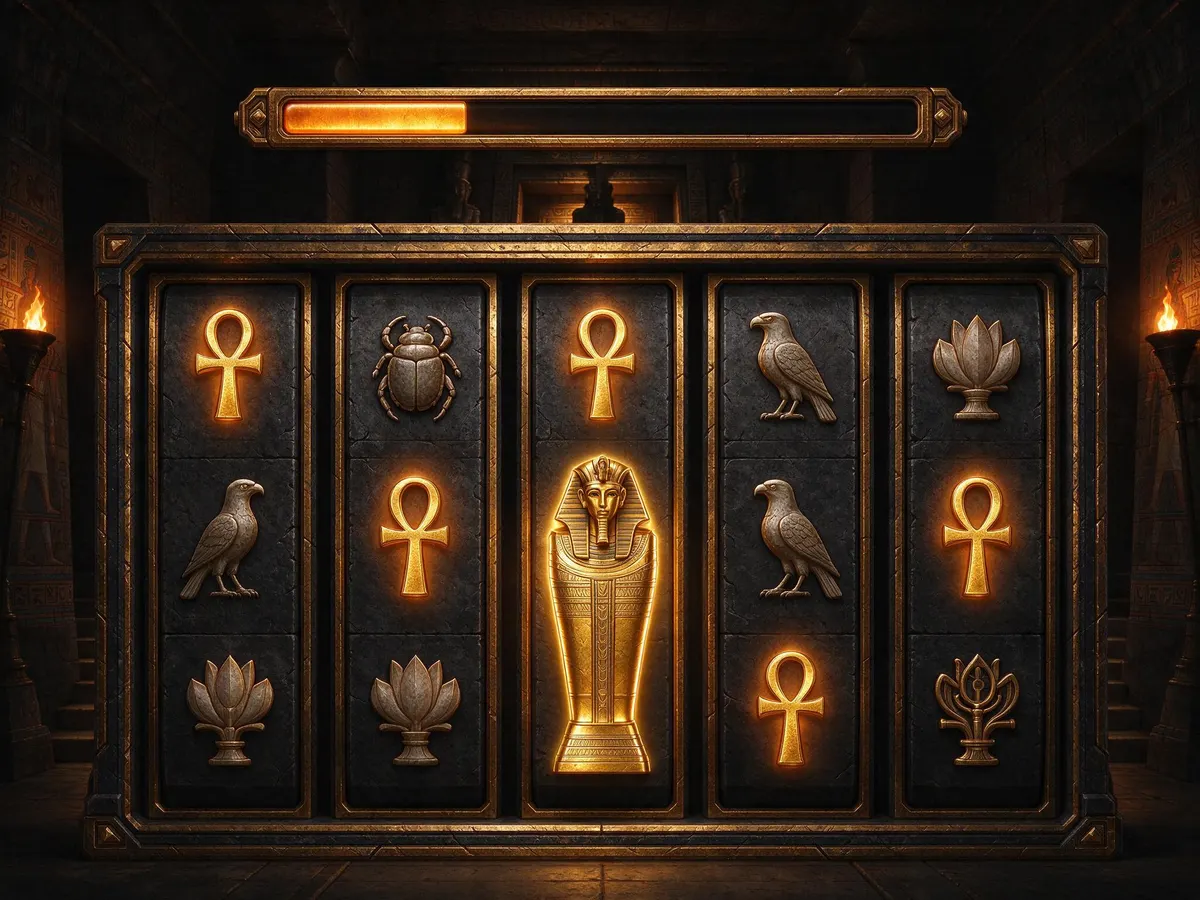
You are ten free spins into Egypt King Multi. A wild drops onto the middle reel, sweeps up the values sitting inside the treasure chests on screen, and a segment of the progress meter above the reels lights up. Fill four of those segments and Swintt hands you another ten spins plus a progressive multiplier applied to everything that follows. That single mechanic is a tidy introduction to how Swintt slots are designed: a small number of fixed paylines, a feature round that does the heavy lifting, and a meter that drip-feeds the sense of progress.
It also hides the part nobody puts on the marketing banner. Egypt King Multi is openly a high volatility game with a ceiling quoted at 2,100x the bet. Both of those numbers tell you more about your likely session than the theme ever will. Here is what Swintt actually makes, how the mechanics work, and the handful of checks worth doing before you load any of their titles.
Swintt as a game provider: how established are they?
Swintt is a Malta-based slot studio that appeared in the supplier market in 2019 and has grown through aggregator deals and direct operator integrations rather than running its own casino. It works within licensed European markets and supplies regulated operators, which is the practical thing to care about: a provider’s games are only as trustworthy as the licence of the casino serving them.
Their catalogue splits into distinct ranges. Premium titles, the band Egypt King Multi sits in, are modern video slots built for online and mobile play. Swintt also produces land-based style games with the stripped-back look and feel of cabinet slots, which is why their library swings between flashy feature-led releases and very plain fruit machines. Recent output shows both sides: Egypt King Multi on the tomb-raiding end, Fresh Fruit Deluxe Money Bloxx on the classic-symbols end.
In India, you will usually meet Swintt games inside a lobby aggregated alongside dozens of other studios, filed under the provider filter rather than promoted on the front page. They are a mid-sized supplier with a steady release schedule, not a household name like NetEnt or Pragmatic Play.
How Swintt slots work
Paylines: fixed, and fewer than you might expect
Egypt King Multi runs 10 fixed paylines. Fixed means you cannot switch lines off to lower your stake; every spin covers all ten and the bet you choose is spread across them. Ten is modest by modern standards, where Megaways-style games advertise thousands of ways to win. Fewer lines is not worse. It simply means wins arrive in a different rhythm: less often, with more of the payout concentrated in the feature round.
Reel setups and grids
The 5×3 grid, five reels across and three symbol positions deep, is Swintt’s workhorse layout and the format most of their Premium releases use. Their classic-style games often shrink further, to three reels and a single line. Grid size matters because it caps how many symbol combinations exist, which in turn shapes hit frequency. A 5×3 game with 10 lines gives a game designer far fewer levers than a 6×5 cluster-pays grid, so the interesting maths tends to get pushed into the bonus.
Betting ranges and session length
Swintt games typically offer a wide stake range so the same title works for a ₹10 spinner and a high roller. Check the minimum and maximum in the bet menu before you start, then do the arithmetic that most players skip: your stake multiplied by roughly 400 to 600 spins is what an hour of fast play can cost you in turnover. If that number makes you uncomfortable, lower the stake rather than shortening the session.
One more thing to look for on the betting panel: a feature buy. Egypt King Multi lets players purchase entry to the free spins round directly instead of waiting for three scatters. Buy-ins cost a large multiple of the base bet, are not available in every regulated market, and sharply increase how quickly money moves through the game. They do not improve your expected return.
RTP in Swintt slots: what the numbers mean
Reading RTP honestly
RTP, or return to player, is the share of all money wagered that a game returns to players on average across millions of rounds. A 96% RTP means roughly ₹96 comes back per ₹100 staked over that enormous sample, and the remaining 4% is the house edge. It is not a per-session figure and it is not a promise. Any individual hour can land far above or far below it.
Most online slots, Swintt’s included, sit in the 94% to 97% band. Here is what that spread costs over the long run on ₹10,000 of total turnover, which is what you generate quickly when you replay the same money across many spins:
| RTP | House edge | Theoretical long-run return on ₹10,000 wagered |
|---|---|---|
| 97% | 3% | ₹9,700 |
| 96% | 4% | ₹9,600 |
| 95% | 5% | ₹9,500 |
| 94% | 6% | ₹9,400 |
Two percentage points looks trivial and is not. Over heavy play it is the difference between a slow bleed and a faster one, which is the honest frame for all slot play: the edge belongs to the house, permanently.
Where to find the actual figure
Never assume an RTP. Open the game, tap the menu or the “i” icon, and read the information panel or paytable, which states the theoretical return. This matters more than usual with Swintt and most other suppliers because many studios ship multiple RTP configurations of the same slot, and the operator picks which version to run. The same title can be 96% at one casino and noticeably lower at another. The in-game panel reflects the version you are actually playing. If you want the mechanics behind that number in more depth, our guide to how slot RTP works walks through the calculation.
Volatility: why Egypt King Multi flags itself as high
High and low, side by side
Volatility, also called variance, describes how a game’s returns are distributed rather than how large they are in total. It does not change RTP. A high volatility slot and a low volatility slot can both return 96% in theory and feel completely different to play.
| Low volatility | High volatility | |
|---|---|---|
| Win frequency | Frequent, small | Rare, larger |
| Balance behaviour | Grinds slowly in both directions | Long dry stretches, sudden spikes |
| Where the money sits | Spread across base game | Concentrated in the feature round |
| Suits | Longer sessions on a small stake | Players comfortable with swings |
Spotting the volatility level yourself
Some lobbies print a volatility rating next to the RTP. When they do not, read the game’s own signals:
- Max win multiplier. Egypt King Multi quotes up to 2,100x the bet. Ceilings in the thousands of times the stake only exist in games where the outcome distribution is stretched thin, meaning extremely rare top results. Treat a max win as a theoretical boundary, not an outcome to plan around.
- Where the features live. If the paytable’s interesting mechanics, collecting wilds, progress meters, progressive multipliers, all sit inside free spins, the base game is likely to feel quiet.
- Scatter requirements. Needing three scatters for a ten-spin round, with a buy option offered as a shortcut, signals a feature that triggers infrequently.
- Paytable top line. Compare the highest five-of-a-kind payout to the bet. A big gap between the top symbol and the mid-tier symbols points to higher variance.
Our breakdown of slot volatility covers how to read these cues across providers.
The features Swintt keeps returning to
Free spins as the main event
The bonus round is where Swintt concentrates its design effort. Egypt King Multi awards an initial 10 free spins, triggered by three scatter symbols or bought directly, and the round then layers extra mechanics on top rather than simply repeating base-game spins.
Wilds, scatters and collection mechanics
Wild symbols substitute for others to complete line wins; scatter symbols trigger features regardless of where they land. Swintt frequently gives wilds a second job. In Egypt King Multi, a wild appearing during free spins collects the values held inside any treasure chests on the reels, turning a substitution symbol into a payout-gathering one. That collection design, symbols harvesting values from elsewhere on the grid, shows up repeatedly in modern Swintt releases.
Progressive multipliers and progress meters
The meter above the Egypt King Multi reels advances one segment for every wild that appears during free spins. Complete four sections and the game awards 10 more free spins and attaches a progressive multiplier to subsequent wins. It is a well-judged piece of design because it gives a quiet spin some meaning. It is also worth naming what it is: a pacing device that rewards continued play. The multiplier is already priced into the game’s RTP, so a rising meter does not mean the slot “owes” you anything.
What to check before you load a Swintt slot
Thirty seconds in the information panel is worth more than any strategy article. Before your first real-money spin:
- The stated RTP in that specific game at that specific casino, not a number from a review.
- Volatility and the max win multiplier, so you know whether to expect a grind or long gaps.
- Minimum and maximum bet, then set a stake you could lose across several hundred spins without it mattering.
- How features trigger, including whether a feature buy exists and what it costs.
- Bonus terms if you are playing with a casino bonus. Check the wagering requirement, whether the game contributes 100% towards it, the max bet allowed while a bonus is active, and any cap on withdrawals.
- Licensing of the operator, plus payment and KYC rules, because the game is only one part of the transaction.
Slots are entertainment with a built-in mathematical cost. No RTP figure, volatility rating or clever meter mechanic changes the fact that the house holds the edge over time, and nothing in a game’s design can be played around. Set deposit and loss limits before you start, use session reminders if your casino offers them, and step away from money you cannot afford to lose. If play stops feeling like a choice, responsible gambling tools and support services are available, and self-exclusion exists for exactly that moment. Players must be of legal age in their jurisdiction.