
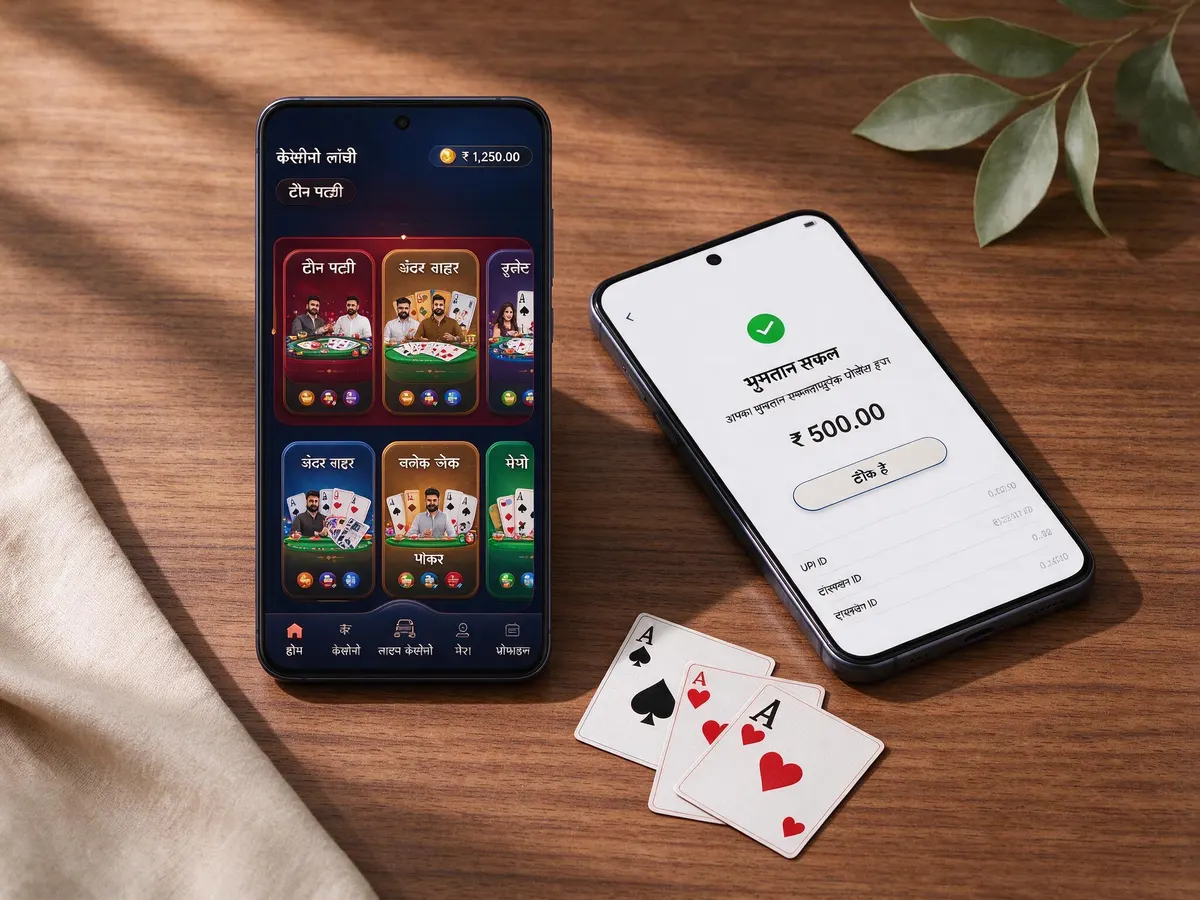
A casino localisation strategy is the work of making a global gambling platform behave as if it were built in the market it serves. That sounds like a translation job. It isn’t. Translation is the cheapest part, and it is usually the part operators get half right while failing at the thing players actually notice first: whether the deposit goes through.
For Indian players, that is the whole story in miniature. A site can have 4,000 slots, a slick lobby and a Hindi language toggle, and still be useless if your bank declines the transaction, the balance displays in dollars, and the only live table games are European roulette variants. Localisation decides which platforms feel usable and which feel like someone’s export project.
What casino localisation actually covers
Localisation is the sum of the adjustments an operator makes so a platform matches local payment rails, local game tastes, local language and local habits. Slotegrator’s report on localisation, “No market left behind: Localise for growth”, maps this across Africa, Asia, Europe, Latin America and North America, and the categories it works through are the practical ones: payment methods, licensing, tax, mobile penetration, interface design, game preferences and retention. The report includes a ten-question self-check for operators covering things as mundane as local holidays, and its blunt conclusion is that operators who can’t confidently answer most of it tend to lose ground to better-prepared rivals.
The payment examples it cites make the point without any theory needed: Pix in Brazil, M-Pesa in Kenya, OXXO in Mexico. Each one is the default way money moves in that country, and each one is non-obvious to anyone sitting in an office elsewhere. India’s equivalent is UPI, plus NetBanking behind it. Miss those and nothing else you build matters much.
Worth saying plainly: the legal picture for real-money online gambling in India varies by state and has been changing. Localisation is about product fit, not legality. Check what applies where you live before you deposit anywhere.
Payments: why UPI and NetBanking beat international cards
Local payment methods are the single biggest filter on whether an Indian player can use a platform at all. International cards issued in India are frequently declined on gambling merchant categories, and a decline at the cashier is where most new accounts quietly die. UPI, by contrast, is instant, bank-to-bank, free to the user, and already on the phone of practically everyone reading this.
Rupees on screen versus dollars on your statement
INR casino support is not cosmetic. When a platform holds balances in rupees and bills in rupees, what you deposit is what you see. When it prices in USD or EUR, your bank applies a currency conversion markup on the way in, and often again on the way out, plus a cross-border fee. You lose a slice of every transaction to the plumbing before a single bet is placed, and reconciling your own spending becomes guesswork.
Rupee accounting also helps with the boring admin. Winnings from online games are taxable in India and tax is deducted at source on net winnings, so a clean rupee transaction history is worth having. Treat that as general information rather than tax advice, and check the current rules or ask an accountant.
The apps people already use
Beyond UPI itself, well-adapted platforms support the wallets and rails Indians transact with daily: PhonePe, Paytm, Google Pay via UPI handles, and NetBanking for larger amounts. The difference in comfort is real. Paying with a UPI PIN you use for groceries feels ordinary; typing a 16-digit card number into an offshore cashier does not.
| Method | How it works for Indian players | Where the friction shows up |
|---|---|---|
| UPI (PhonePe, Google Pay, Paytm) | Instant bank-to-bank in rupees, no card details shared | Not every operator supports withdrawals back to UPI, only deposits |
| NetBanking | Direct bank transfer, suits larger deposits | Slower confirmation; bank may flag the merchant |
| Wallets | Familiar interface, small balances held separately | Limits can be low; wallet-to-bank transfer adds a step |
| International cards | Widely offered on offshore sites | Declines are common; forex markup and cross-border fees apply |
| Crypto | Works regardless of card issuer policy | Price volatility, conversion spread, and a steeper learning curve |
One more thing to check that operators rarely advertise: whether withdrawals use the same rail as deposits, and whether KYC verification is required before your first cashout. A platform that takes UPI instantly and then pays out only by bank transfer after a week of document review is localised on one side only.
Game selection that matches how Indians actually play
Regional game preferences are the second tell. A lobby built for Northern Europe leads with slot franchises and baccarat tables. A lobby built with Indian players in mind leads with cards people learned at family gatherings.
Teen Patti and Andar Bahar in digital form
Teen Patti is a three-card game with mechanics most Indian players absorbed long before they ever saw a casino app, which removes the entire learning curve that a 243-ways slot imposes. Live dealer versions add the part that online slots can’t replicate: a human dealing to a visible table, in real time, often with a Hindi-speaking host. Andar Bahar is even simpler, you pick which side a matching card lands on, and the payouts reflect the real probabilities (the Andar side typically pays slightly less because it’s marginally more likely to hit). There is still a house edge on both. Familiarity makes a game comfortable, not favourable. If you want the mechanics in detail, see our Teen Patti rules and hand rankings guide.
Why Aviator caught on here
Aviator is a crash game: a multiplier climbs from 1.00× and the plane flies away at a random point, so you either cash out before that or lose the stake. Its popularity in India comes down to practical fit. Rounds last seconds, minimum stakes are tiny, it runs fine on a mid-range phone and a patchy connection, the decision is one tap rather than a paytable study, and the provably fair system lets you verify that a round wasn’t manipulated. Aviator’s published RTP is 97%, which means a 3% house edge over the long run, and the auto cash-out setting removes the temptation to hold on. It does not remove the edge. Our explainer on how Aviator works covers the mechanics and the maths.
Both categories run on RNG. Rounds are independent, so there are no hot or cold streaks to read, whatever the in-game chat says.
Language and interface: past the English menu
Language support is where you can see how much an operator invested. A Hindi toggle that translates the homepage and leaves the cashier, bonus terms and support pages in English is a marketing feature, not localisation. The terms are exactly where precise wording matters most, because that’s where wagering requirements, game weighting and max cashout caps live.
Good signs look like this: Hindi that reads as though a person wrote it rather than a machine; vernacular options for players who prefer Bengali, Tamil, Telugu or Marathi; the ₹ symbol used consistently; amounts formatted in lakhs and crores where that’s natural; dates and support hours quoted in IST. Operators who understand the market also schedule promotions around Diwali and the IPL calendar rather than Christmas, which is precisely the “local holidays” item on Slotegrator’s checklist. Support channels matter too. WhatsApp or live chat staffed during Indian evening hours tells you more about a platform’s priorities than any welcome bonus headline.
A player’s checklist for judging operator localisation
Before depositing anywhere, run through this. It takes about five minutes and the cashier page answers most of it.
- Does the cashier list UPI and NetBanking for both deposits and withdrawals, in rupees, with no conversion step?
- Are minimum and maximum limits quoted in rupees, and are payout timelines stated rather than implied?
- Is KYC explained upfront, including which documents are accepted?
- Does the live casino lobby carry Teen Patti, Andar Bahar and other Indian tables from studios you can name, not just one token table?
- Is the Hindi or regional-language version complete, terms and conditions included?
- Can you reach support during Indian hours, and in Hindi if you want it?
- Do bonus terms state the wagering requirement, game weighting, max bet while a bonus is active and max cashout, all in rupees?
- Are responsible gambling tools, deposit and loss limits, cool-off, self-exclusion, available in rupee amounts and easy to find?
- Is the licence and operating company disclosed in the footer?
A platform that fails three or four of these isn’t badly intentioned. It’s just running a template built for somewhere else, and you’ll feel it the first time a withdrawal gets stuck.
Keep the distinction straight, though, because the whole point of localisation is easy to misread. Better payment rails, familiar card games and a working Hindi interface change how smoothly you can play. They do not change the house edge, and no amount of cultural fit turns a 3% or 4% edge into a positive expectation. Set a deposit limit, treat the money as spent entertainment, and use the responsible gambling tools on any site you join. The minimum age for real-money play depends on where you are, 18 and over in India, while many US states require 21 for casinos and sportsbooks, so check the rule that applies to you. And if it stops being fun, the self-exclusion button is the best-localised feature on any platform.